
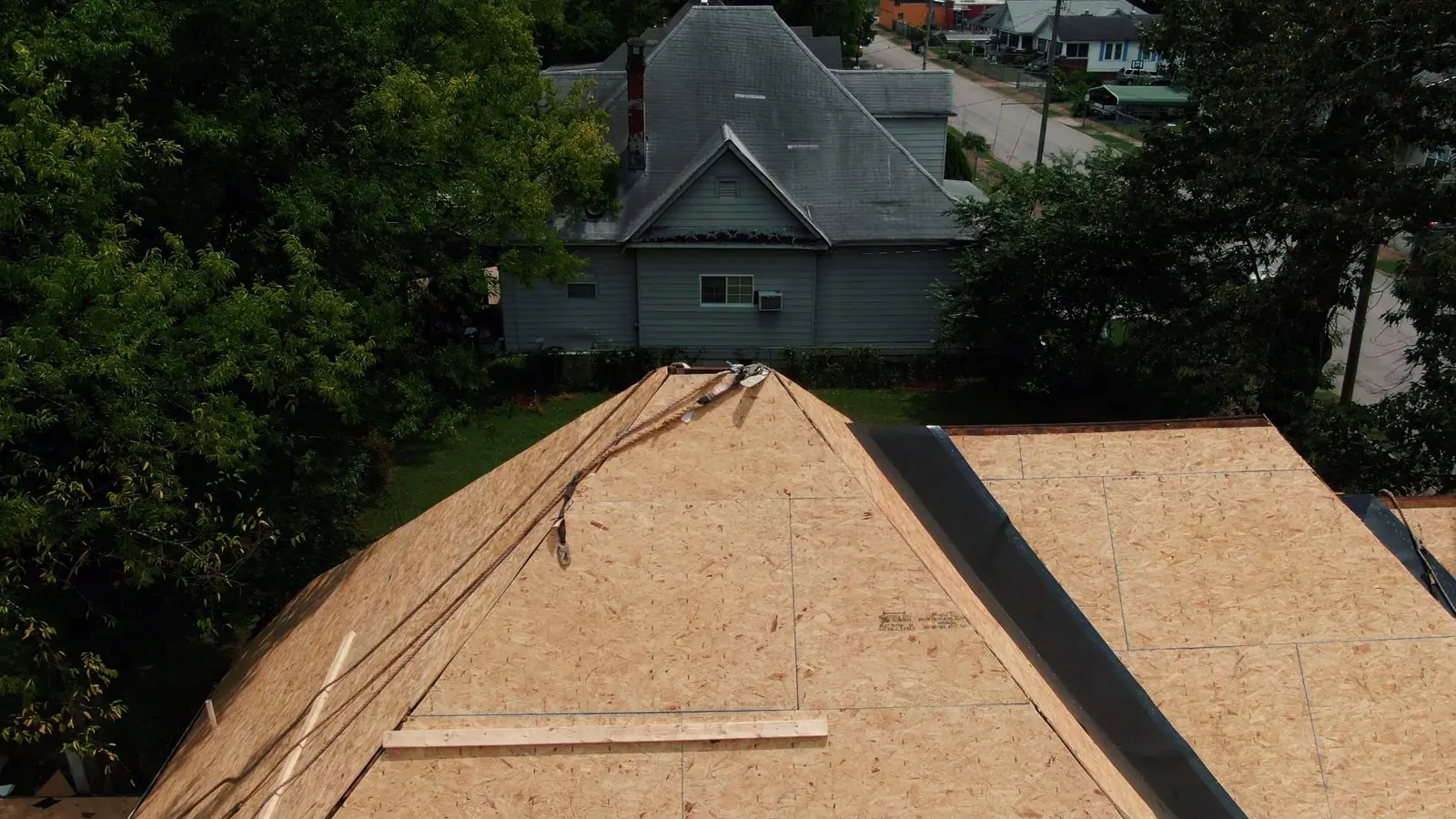
 Real construction contextExposed deck and protected valley
Shingle roofing
Know every layer. Choose with clarity.
See what protects your home, then compare GAF shingle styles without wading through a product catalog.
Explore the roof systemCinematic roof construction film07
coordinated parts to discuss for your roof
Silent cinematic loop · motion and data preferences respected
Explore your roofing system
See the main parts of a complete roof.
Select a roof part to learn what it does01 · Leak barrier
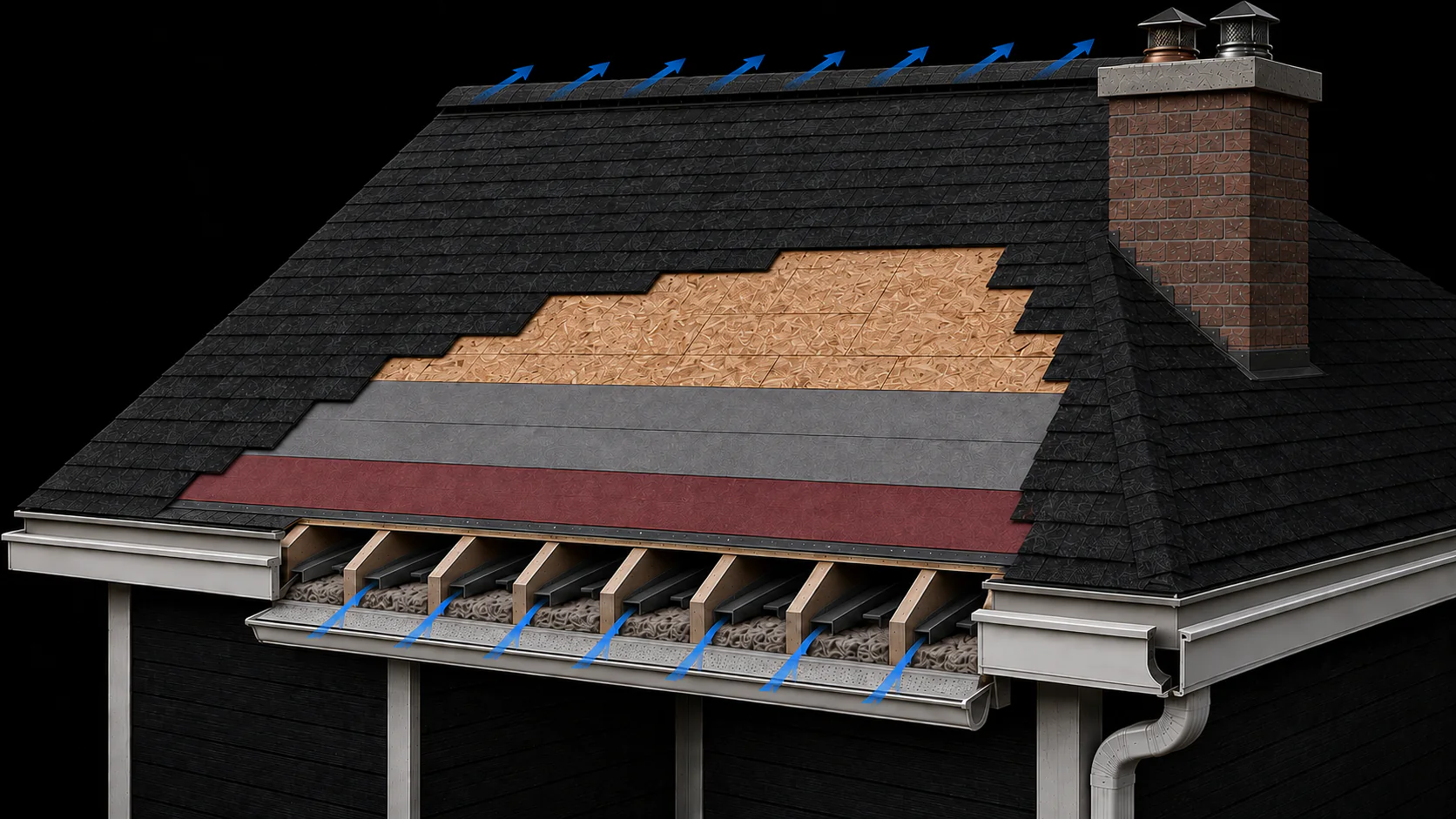
01 · Leak barrierAt specified vulnerable details—shown here at the eave and around the chimney transition.
Roof partsChoose a part below
Real construction contextExposed deck and protected valley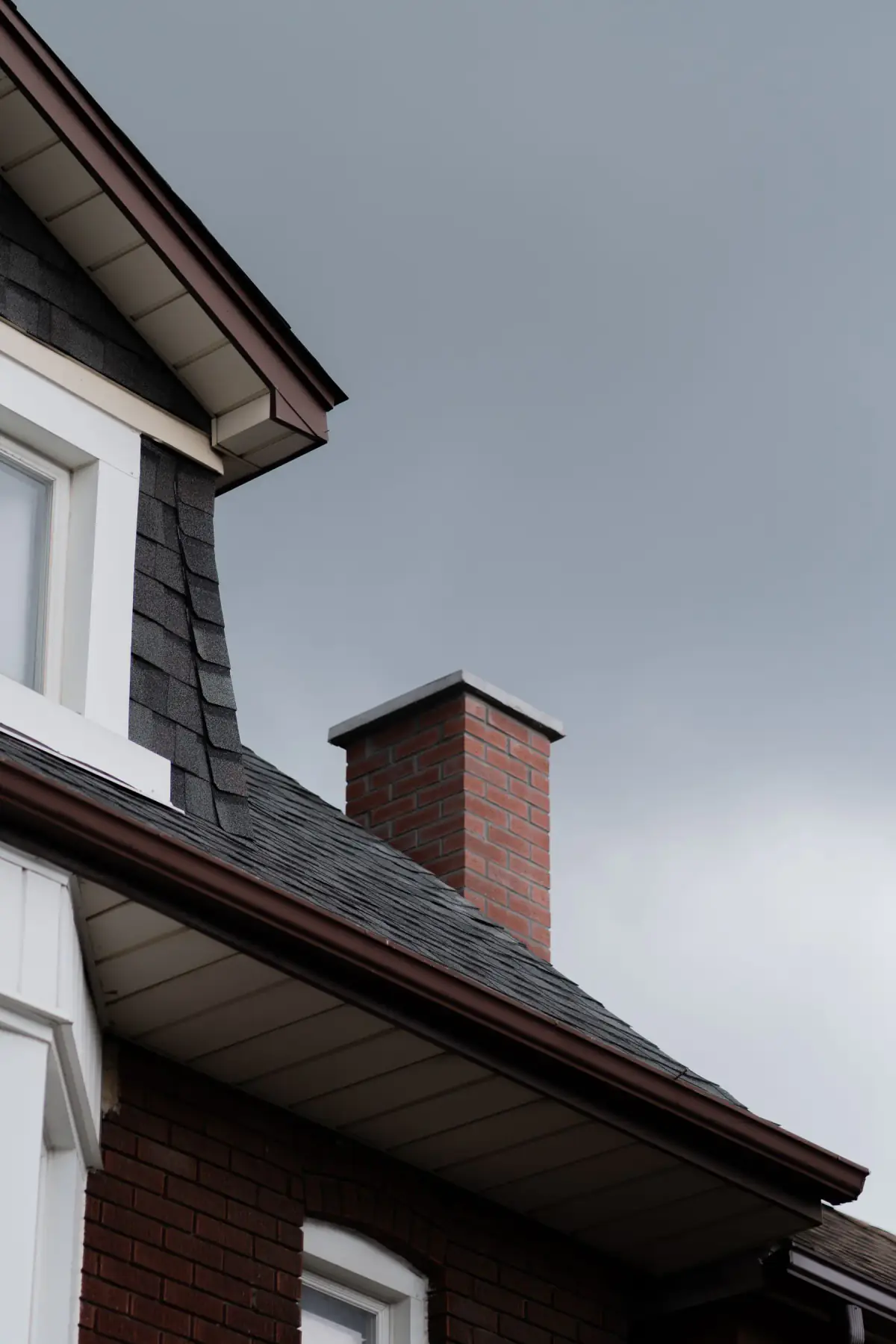 Real finished-roof contextShingles and chimney transition
Vulnerable areas
Leak barrier
A self-adhering membrane may add protection at eaves, valleys, rakes, chimneys, and skylights where wind-driven rain can find a way in.
Where it belongsAt specified vulnerable details—shown here at the eave and around the chimney transition.
More about this part
- Its job
- Concentrated water at selected vulnerable locations before it reaches the roof deck.
- Keep in mind
- It is not a substitute for correct flashing, drainage, or a roof detail designed for the home.
Read all seven main roof components as text
01 · Leak barrier
Vulnerable areas. A self-adhering membrane may add protection at eaves, valleys, rakes, chimneys, and skylights where wind-driven rain can find a way in.
- Its job
- Concentrated water at selected vulnerable locations before it reaches the roof deck.
- Keep in mind
- It is not a substitute for correct flashing, drainage, or a roof detail designed for the home.
Ask: “Where does my roof need extra water protection?”
02 · Underlayment
Secondary moisture layer. This protective sheet sits beneath the shingles and above the wood base of your roof. It adds a second layer of moisture protection.
- Its job
- A secondary path for incidental moisture beneath the shingle surface.
- Keep in mind
- Underlayment is not the finished weather-shedding surface and does not correct damaged decking.
Ask: “Which underlayment is included in my proposal?”
03 · Starter edge
Secure roof edges. Factory-positioned sealant at eaves and rakes helps reduce shingle blow-off where your roof meets the wind first.
- Its job
- The first shingle course at the eaves and rakes where wind can work under the roof edge.
- Keep in mind
- A starter strip supports the edge detail; it does not make a roof immune to wind damage.
Ask: “How are the vulnerable edges of my roof protected?”
04 · Shingles
Visible weather-shedding layer. Fiberglass-based asphalt shingles form the surface you see. Style, color, availability, and warranty eligibility all deserve a clear conversation.
- Its job
- The primary surface that sheds rain while creating the roof profile and curb appeal you see.
- Keep in mind
- A product name alone does not establish impact resistance, algae coverage, wind eligibility, or roof lifespan.
Ask: “Which shingle choices fit my home and priorities?”
05 · Chimney flashing
Roof details and transitions. Flashing is the material that helps direct water away from the joint between your chimney and roof. Vents, walls, and other joints need protection too.
- Its job
- Water where roof planes meet walls, chimneys, vents, valleys, skylights, and other transitions.
- Keep in mind
- The proposal should say what is replaced, reused, or excluded; generic accessory language is not enough.
Ask: “How will penetrations and transitions be handled?”
06 · Soffit intake
Low intake for balanced airflow. Vents beneath the roof edges let fresh air into the attic. Paired with vents higher up, they help move heat and moisture outside.
- Its job
- The low-air entry side of a balanced ventilation path from soffit intake to high exhaust.
- Keep in mind
- Intake openings must remain clear of insulation and be sized with the exhaust and attic design; adding exhaust alone can unbalance the system.
Ask: “How will the soffit intake stay open and balance the exhaust?”
07 · Ridge vent + caps
High exhaust and finished ridge. A properly sized ridge vent provides high exhaust while purpose-made cap shingles cover and protect the ridge with a finished appearance.
- Its job
- The high-air exit of the ventilation path and the weather-shedding finish where the roof planes meet.
- Keep in mind
- The vent opening, exhaust product, intake area, fasteners, and cap shingles must be designed as one compatible system for the home.
Ask: “Which ridge vent and cap shingles complete my ventilation system?”
Compare GAF shingle families
GAF shingle choices
Find the look. Understand the difference.
Start with the profile you like. Open a product only when you want the details.
Roof photography is shown for visual context, not as an exact GAF color sample. Confirm the final choice with an approved physical sample.
GAF product family guide1 / 5 shown
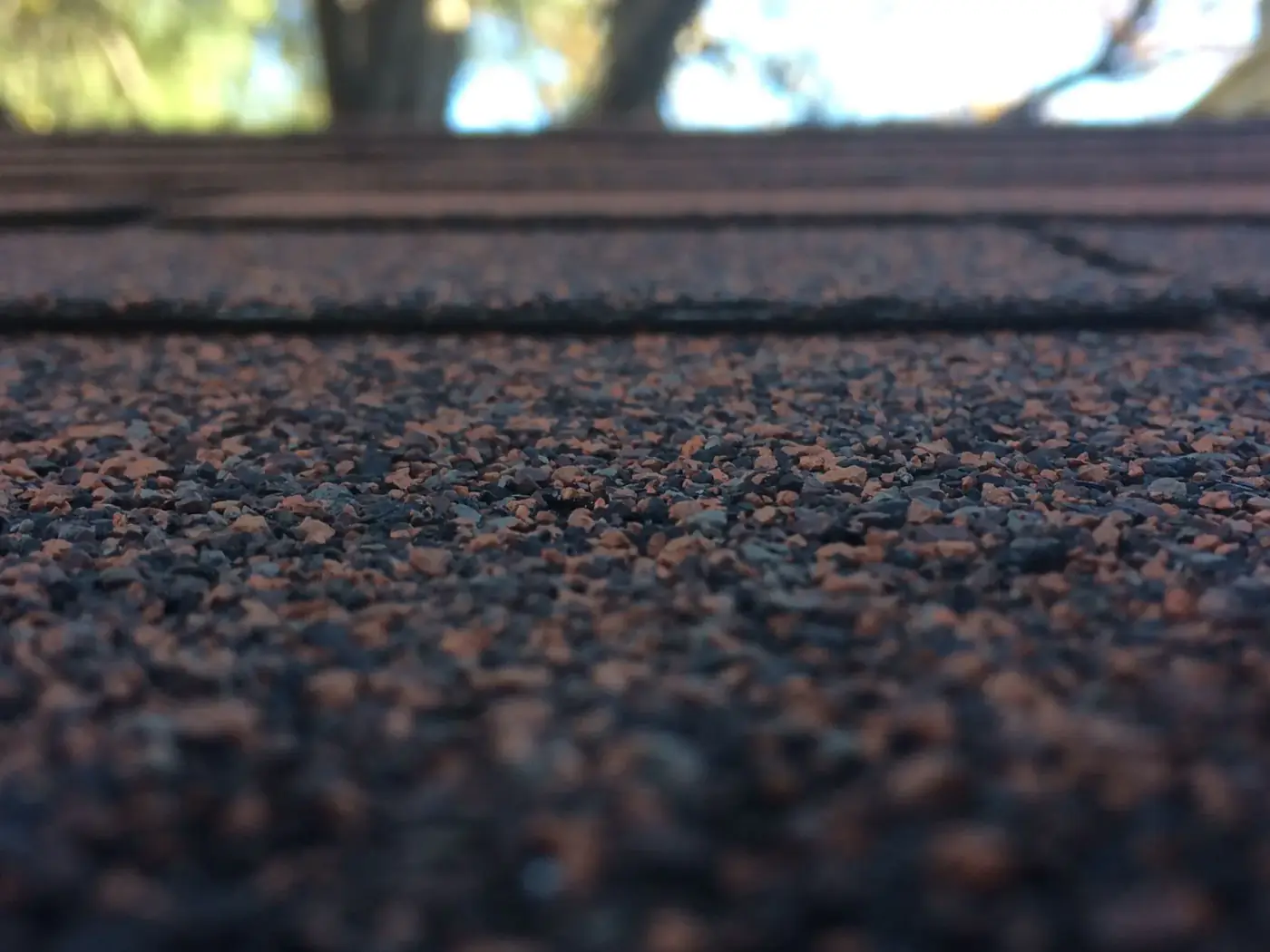
A GAF option to discuss
Timberline HDZ® Shingles
Dimensional architectural optionA layered shingle style to compare for your home. Confirm the available colors, exact product features, and warranty before choosing.
Product details and warranty limits
HDZ is a dimensional architectural family with installation-oriented LayerLock and StrikeZone features. The exact color, package label, accessories, and complete installed system still matter.
Keep in mind: The product name does not guarantee a particular impact label, unlimited wind coverage, algae performance in every region, or a specific roof lifespan.
- Impact label
- UL 2218 Class 3 only when the package carries the classification label
- Algae coverage
- 25-year StainGuard Plus™ Algae Protection Limited Warranty on qualifying labeled products
- System context
- May be eligible for the WindProven™ Limited Wind Warranty only when every required qualifying component and installation condition is met
Ask us“Which HDZ color and labeled features are available for my home?”Official GAF details
Compare all shingle options side by side
| Family | Profile | Impact conversation | Algae conversation | System context |
|---|---|---|---|---|
| HDZTimberline HDZ® Shingles | Dimensional laminate | Class 3 on qualifying labeled packages | 25-year limited term on qualifying labels | System conditions apply |
| UHDZTimberline UHDZ® Shingles | Premium dimensional laminate | Class 4 on qualifying labeled packages | 30-year limited term on qualifying labels | Complete qualifying system required |
| AS IITimberline® AS II Shingles | SBS-modified architectural | Class 4 on qualifying labeled packages | 25-year limited term on qualifying labels | System conditions apply |
| DESIGNERGAF Designer Shingles | Shake- or slate-inspired families | Verify the exact family and package label | Varies by product and qualifying label | Exact-family verification required |
| VALUEValue-oriented GAF options | Architectural or traditional 3-tab | No classification should be assumed | Product and Western-region limitations apply | Different system and warranty positions |
Availability, colors, classifications, package labels, and warranty eligibility vary. Your signed proposal should name every material selected.
Before you approve a roof
The written scope matters more than the label.
A clear proposal should identify the products, where leak protection and flashing go, how attic airflow was evaluated, what happens if hidden deck damage appears, and the exact warranty being offered.
Your project documents control. Product availability and warranty eligibility can change. Review the official GAF roof-parts guide , 2026 product guide , and current warranty terms . Impact classifications do not make a shingle hail-proof, and algae-discoloration coverage does not mean moss-proof.
Ask about roofing materials